I’ve spent years behind the wheel of everything from Bugatti hypercars to Honda minivans. I’ve watched engines evolve, suspensions reinvent themselves, and design philosophies swing wildly between extremes.
But one thing has remained absolutely consistent across brands, segments, and price brackets:
the screens keep getting bigger.
Every new model year, every refresh, every “facelift” — the displays inflate like they’re competing in some secret industry contest.
But now, something unexpected is happening:
Drivers are pushing back.
The digital era is beginning to feel heavy, distracting, over-engineered. And while most automakers are slowly dialing back the screen madness, one company seems not to have received the memo.
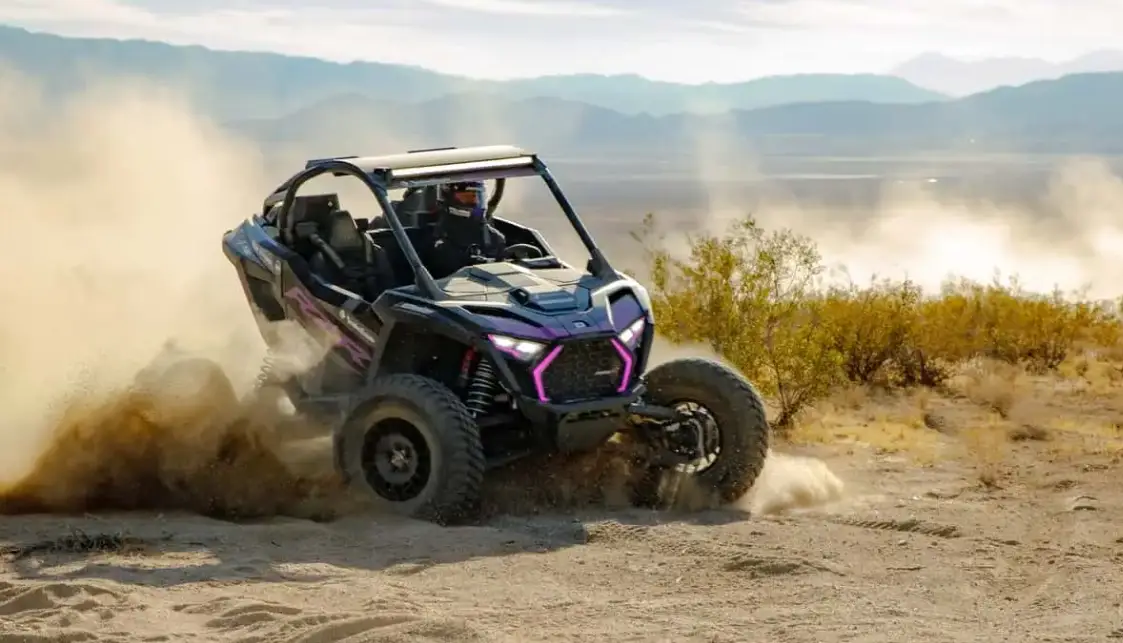
Yes, I’m looking at you, Polaris, and your massive, borderline-comical touchscreen in the new 2026 RZR Pro R.
Let’s talk about why this giant display is so controversial — and why it may symbolize the shifting direction of modern automotive design.
The Rise of Oversized Car Touchscreens — and Why It’s Backfiring 📱➡️😵
Back when center screens first appeared, they were simple mini panels that helped with radio tuning and navigation. Harmless. Practical. Basic.
Fast-forward a decade, and some dashboards now look like someone glued a living-room TV across the cabin. Screens stretch from A-pillar to A-pillar. Rear passengers get their own screens. Front passengers get their own screens. Even climate controls hide behind touch-only interfaces.
Luxury brand? Big screen.
Economy car? Still a big screen.
Off-road vehicle? Surprise — giant screen.
The logic has been painfully clear:
“Bigger screen = more premium = higher sales.”
But here’s the twist:
People are tired of it.
Drivers complain about:
- touchscreen lag
- buried menus
- blinding brightness at night
- fingerprints everywhere
- the need to look away from the road
- constant software glitches
- manufacturers removing physical buttons “to save costs”
Touchscreens have gone from innovation to irritation.
The Return of Physical Buttons — Because Drivers Want Control Back 🔘❤️
In Europe and North America, the backlash has grown so loud that automakers can’t ignore it anymore.
Brands like BMW, Porsche, Hyundai, Honda, and Ford have publicly announced they’re reintroducing physical knobs and buttons because customers are demanding them.
Why Buttons Beat Screens Every Time
- tactile feedback (you can use them without looking)
- safer in motion
- more reliable over rough terrain
- no menus or submenus
- they work even with gloves
- they don’t blind you at night
And all of these reasons are doubly important in off-road vehicles, where dust, mud, vibration, sunlight, and gloves are part of the daily reality.
The industry is course-correcting.
Which makes Polaris’ decision even more confusing.
Meanwhile… Polaris Drops the Biggest Screen in the Off-Road Market 😅
While most brands are scaling down their digital overload, Polaris said:
“Hold my beer.”
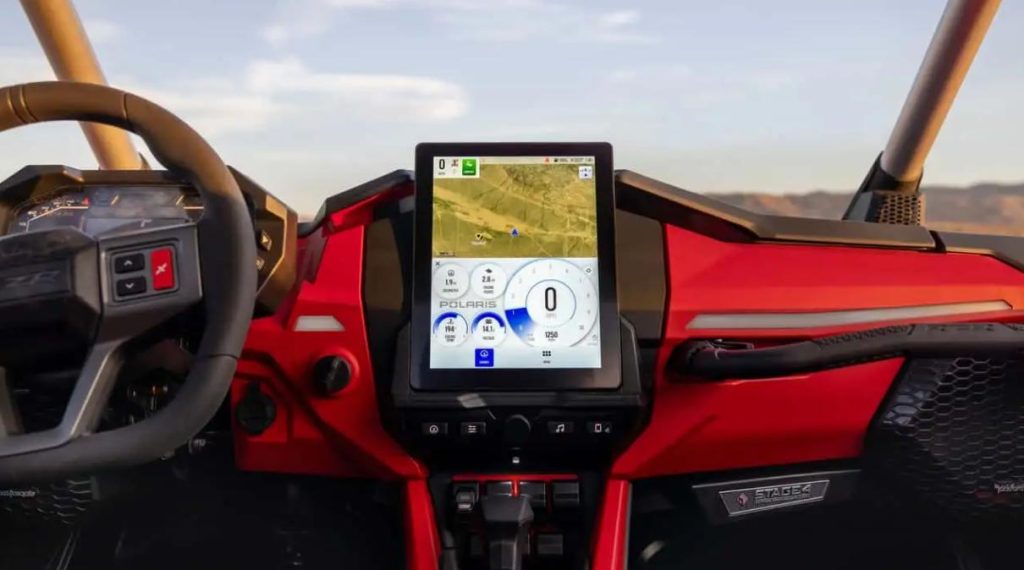
The 2026 Polaris RZR Pro R arrives with one of the largest off-road vehicle displays ever produced.
The Numbers Are Honestly Wild
- Height: 8.3 inches
- Width: 6.2 inches
- Display area: 52 square inches
- Total display real estate: 10.4 inches
To put that in perspective:
This isn’t a utility display.
It isn’t a compact GPS.
It’s basically an iPad bolted onto the center stack of your dirt-kicking, high-vibration off-road machine.
I vividly remember my first reaction:
“Wow… that thing is ridiculous.”
Not “cool” ridiculous.
Not “innovative” ridiculous.
Just… overkill.
Yes, Polaris’ Ride Command System Is Technically Impressive — But Who Is It For? 🤔
To be fair, Polaris didn’t phone this thing in. Their second-generation Ride Command system has some legitimately powerful upgrades:
- 8× faster processing
- 38× faster graphics rendering
- 2× more storage
- 2× faster boot time
- split-screen functionality
- expanded mapping
- passenger-controlled interface
- better tracking and group-ride features
It’s the kind of software improvement that luxury SUVs would brag about.
But that leads us to the real question:
Do off-road drivers actually want a giant screen?
Because the whole point of off-roading is to escape:
- escape notifications
- escape screens
- escape software
- escape blue-light glare
- escape “civilization” for a few hours
Picture this: you’re riding at night through the woods, helmet on, visor down, following the trail by headlight…
…and your own center screen is blasting enough light to turn the cabin into a mini airport runway.
No thanks.
Off-Road Vehicles Need Mechanical Strength — Not More UI 🏔️🛠️
When people buy a side-by-side or a dune-climbing off-road beast, they care about:
- suspension travel
- durability
- weight
- torque
- protection
- ground clearance
- reliability
- repairability
Touchscreens are nowhere near the top of the list — if they make the list at all.
And in rough terrain, a big glossy touchscreen is:
- more fragile
- more distracting
- more expensive to replace
- harder to operate with gloves
- more likely to get damaged
It may be technologically impressive, but it’s also conceptually mismatched.
Over-Digitalization Is the New Automotive Villain 🛑⌨️
The Polaris RZR Pro R’s screen highlights a bigger truth about the modern automotive landscape:
We’ve hit peak screen.
And drivers are pushing back for three major reasons:
1. People Want Fewer Distractions
Cars are becoming too much like smartphones.
Drivers want clarity, not clutter.
2. Physical Controls Are Safer
Human hands instinctively know where buttons are.
Touchscreens require attention — and attention kills.
3. Privacy Worries Are Growing
Car software collects enormous amounts of data.
People don’t trust manufacturers to protect it — and they shouldn’t.
This is exactly why many brands are retreating from hyper-digital interiors.
Polaris, on the other hand, seems to be sprinting in the opposite direction.
Would I Choose a Giant-Screen Off-Road Vehicle? Honestly, No. 🙅♂️
I love tech. I love innovation. I love clever engineering.
But I also love driving — pure driving — the kind that doesn’t require a firmware update.
So personally?
No, I wouldn’t choose the RZR Pro R’s giant display.
I understand why some riders might love it:
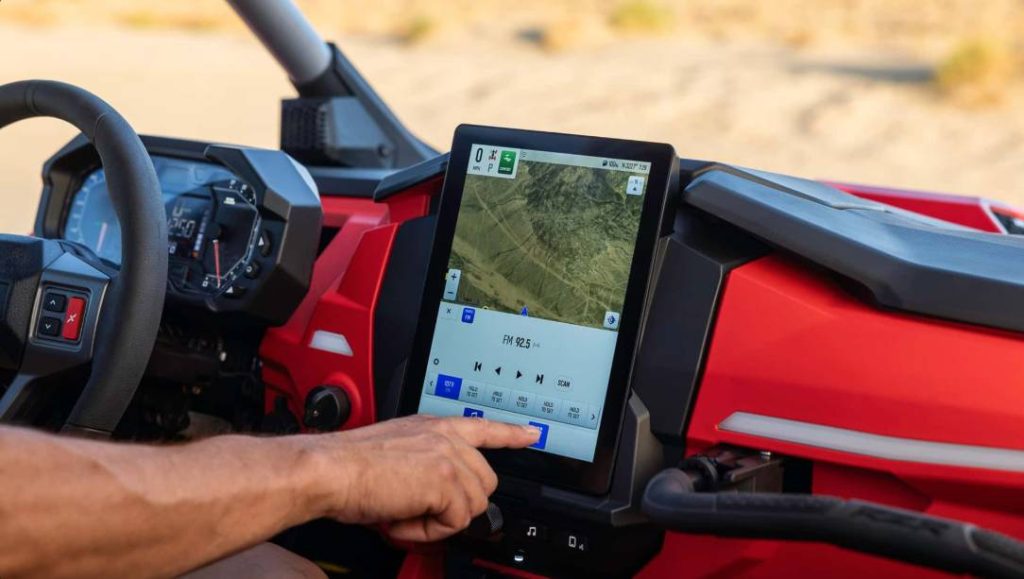
- the mapping
- the navigation
- the co-pilot split-screen
- the gadget appeal
But for me, an off-road machine should feel raw, mechanical, and connected to the environment — not like a mobile workstation bouncing through the dirt.
Technology Is Great… Until It Gets in the Way 🌄
The 2026 Polaris RZR Pro R’s massive infotainment screen is not a technological failure.
It’s a strategic misalignment.
It represents a moment where the automotive world is finally questioning:
- Do we really need bigger screens?
- Is “more digital” always better?
- Are we designing for drivers or designing for marketing photos?
As customers increasingly demand simplicity, tactility, and driver-first ergonomics, the industry’s path forward is becoming clearer:
Tech should enhance the experience — not dominate it.
And when it comes to off-road driving, sometimes the best screen…
is no screen at all.