Upgrade your old sports motorcycle brake system.
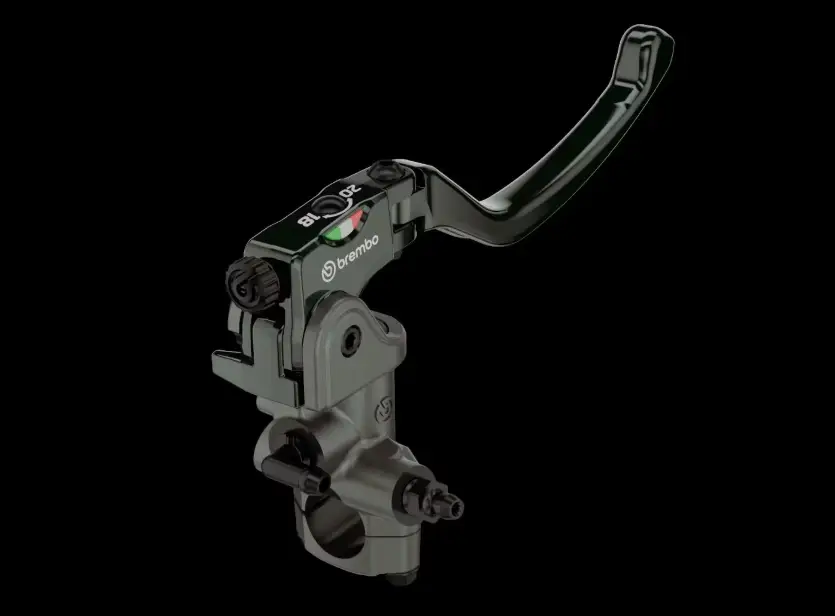
We ordered a set Brembo RCS 19 x 18/20 Master cylinder, let’s see if we can improve the age of our 20-year-old car GSX-R1000 The performance of the braking system.
Few people would deny that the braking system is the most important performance feature among motorcycles, and for sports cars, the importance of this is self-evident. But what if you own an “old-fashioned” sports car and want its braking performance to be closer to modern models? As we have found, if you do not replace the main components or even the entire braking system, what you can do is very limited.
The vehicle being tested this time is a 2005 Suzuki model GSX-R1000, It has just been replaced with a more powerful new engine. To be honest, its speed has far exceeded the range that this almost completely original and heavily worn braking system can withstand.
this K5 It’s a used car, it was already modified when I bought it Galfer Wave shaped brake discs and brake pads, as well as stainless steel brake oil pipes. We soon realized that the original braking system was really poor. When riding at a good speed on mountain roads, using three or four finger brakes is simply not reassuring, so the plan to go to the track day can only be temporarily put on hold until the braking system is fixed. To save money, we switched first SBS The brake pads were replaced with new ones DOT 5 The brake fluid has been drained. The result was disappointing.
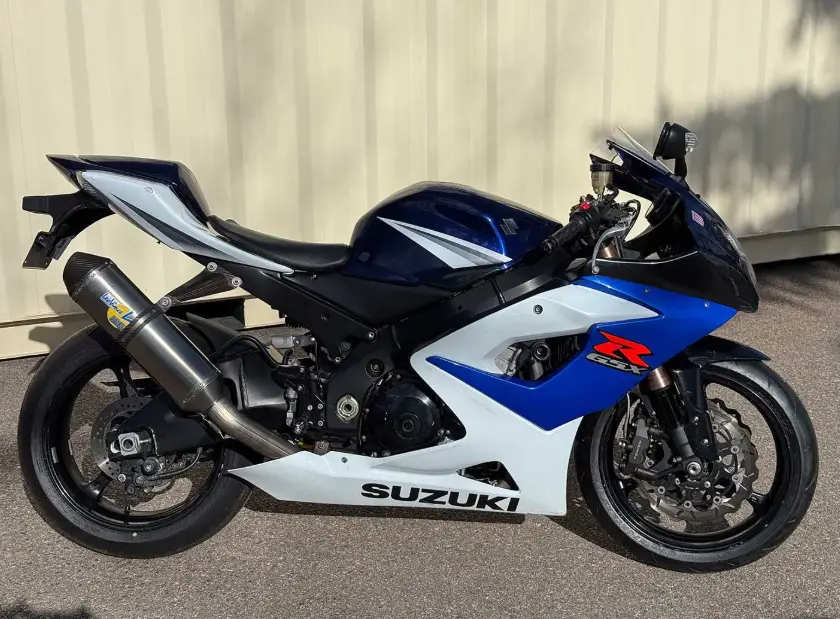
Although it may look similar to what it is now Gixxer 1000 The difference is not significant, but our 2005 model GSX-R1000 The traces of time and wear have already been revealed in terms of braking performance. Brembo
Since we have decided to gradually upgrade the brake system instead of simply throwing thousands of dollars worth of parts onto a 20-year-old car, the most cost-effective upgrade plan is to replace the brake master cylinder. After checking the price of the original brake master cylinder (excluding the handle and reservoir), we found that it only costs a little extra ($426) to buy the top of the line from the Upgrade Line Brembo RCS 19 x 18/20 Master cylinder (part number: 110) A26310), This is simply a wise move. We have detailed our usage in Cycle World magazine Brembo Based on the experience of brake systems, almost all original brands use this Italian brake system in their high-end products.
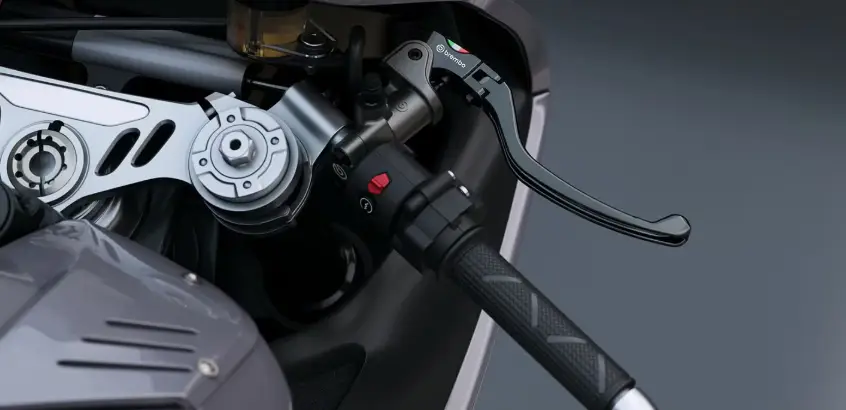
Our goal is to improve the performance and handling of the brake lever as much as possible without replacing the original calipers or modifying the brake discs. The parts we ordered include everything needed to replace the original components, including the master cylinder, detachable brake lever, brake light harness, and a matching new fluid reservoir ($71). The brake component we have chosen adopts a 19mm piston and is equipped with an adjustable brake lever ratio.
Users can choose between two ratios (18 or 20) according to their personal preferences to optimize the braking feel. The braking force in 18th gear is more gradual, while in 20th gear it is more aggressive, providing stronger initial braking force. The brake lever is also equipped with a quick adjuster, making it convenient for users to adjust the stroke according to their personal preferences.
The regulator is located at a port in the front of the brake lever, allowing users to adjust the brake ratio between 18 and 20, with the latter providing stronger initial braking force.
If you are not familiar with the maintenance of the brake system, we recommend that you hire a dealer or motorcycle technician for installation. After removing the original brake master cylinder and reservoir, we proceeded according to Brembo The installation steps involved fixing the new master cylinder and reservoir with bolts.
The only additional operation required is the original brake light harness and Brembo The connector is incompatible. Therefore, we cut off the original factory connector and replaced it with a new one Brembo Weld the matching female connectors onto the original factory wiring harness and plug them in. Next, we need to inject new brake fluid into the system and exhaust the calipers and master cylinder.
We choose reverse exhaust, which means the brake oil is pumped from the caliper pump to the master cylinder. This method is more convenient for replacing the brake system, and due to the brake fluid being pushed upwards into the reservoir, air bubbles can be quickly expelled while greatly reducing the number of brake presses.
After installation, the next step is to conduct a test drive to determine our preferred transmission ratio. We found that the main cause of the problem we encountered was the severely worn original master cylinder, which we had not ridden for a block. The brake lever stroke has been significantly shortened, resulting in a significant improvement in brake control.
Although the final braking force still depends on the original calipers, at least we now know that the components we use for Suzuki motorcycles have already reached their maximum performance. As for the transmission ratio, we ultimately chose the more aggressive 20 in order to achieve the strongest braking force possible.
So, have we achieved the goal of making Suzuki’s braking system reach the level of modern sports car braking systems? The current answer is negative, but we have taken an important step towards bridging the gap. Now we can use two fingers to brake, which greatly enhances driving confidence. In the past 25 years, brake systems have achieved rapid development; The braking system of mass-produced sports cars today is far superior to the system used in factory racing cars 10 years ago.
Therefore, we need to Gixxer Reaching that level of braking system is not an easy task, but with the support of key components, we believe that through some clever improvements, we can create a braking system that is at least much better than any braking system in 2005, closer to modern levels, and may even give drivers the confidence to drive it on the track.